Why does my house still smell like smoke weeks after a fire
Smoke smell that lingers weeks after a fire isn't just annoying - it means soot and odor particles are trapped in your walls, HVAC, and furniture. Here's why it happens and how to fix it.
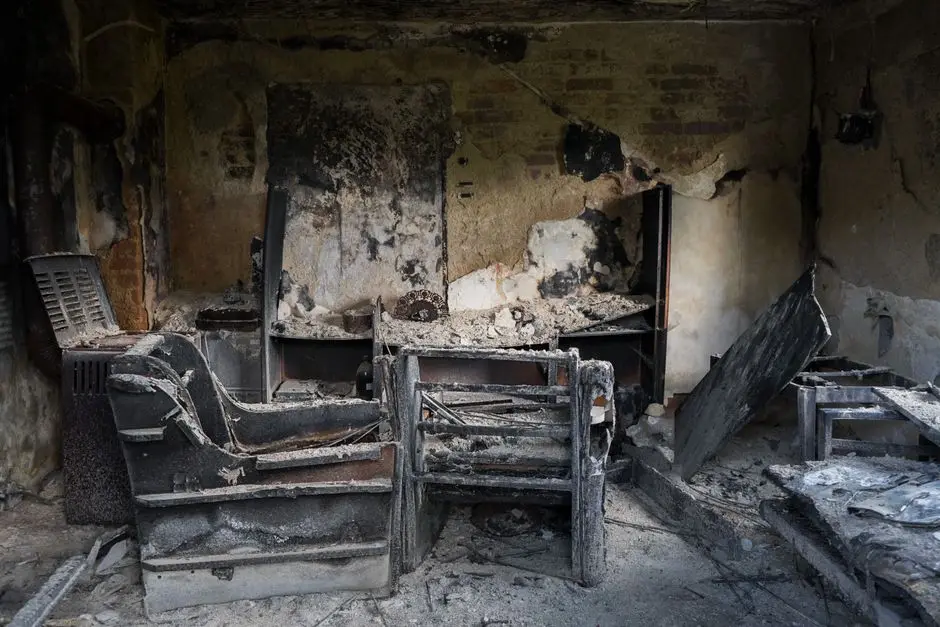
Your house still smells like smoke weeks after a fire because the odor isn't coming from the air - it's coming from soot and smoke particles that soaked into drywall, insulation, wood framing, upholstery, and your HVAC system. Airing the place out only clears the surface; the source keeps off-gassing every time humidity rises or the AC kicks on. In Lake Worth Beach, where summer humidity sits above 70% for months, that cycle can keep a smoke smell alive for a year or more if the source isn't removed. This post breaks down exactly where the smell hides, why it comes back after cleaning, and what actually removes it.
Why smoke smell persists weeks after a fire in Lake Worth Beach
Smoke odor persistence in Lake Worth Beach comes down to three things: particle size, humidity, and the materials your home is built from. Smoke is not a gas that dissipates - it's a cloud of tiny solid and liquid particles, many under 2.5 microns, that lodge in porous surfaces. Once they're in, they stay until something physically removes them.
Humidity is the accelerant. Our coastal air holds moisture that re-wets those particles daily, and every time they re-wet, they release odor compounds again. That's why a house that smelled fine in dry January can smell like a campfire by June. It's also why Smoke Damage Restoration in LAKE WORTH BEACH, Florida has to address moisture, not just wipe surfaces.
Building materials matter too. Older homes in College Park and Parrot Cove often have plaster walls, heart-pine framing, and original hardwood - all of which absorb smoke deeper than modern drywall and engineered flooring. A 1940s bungalow can hold odor in its walls for months after a small kitchen fire that a 2015 build would shrug off in weeks.
The four places smoke odor hides in a Lake Worth Beach home
Smoke odor in a Lake Worth Beach home hides in four predictable zones, and missing any one of them is why the smell returns. Our technicians check all four on every job before we quote a scope.
1. Wall cavities and insulation
Smoke pushes into wall cavities through outlets, switch plates, and gaps around trim. Once inside, it coats the back of drywall and settles into fiberglass or cellulose insulation. No amount of surface wiping reaches it. In most cases the affected drywall has to come out to the studs, the cavity has to be HEPA-vacuumed and sealed, and new insulation goes in.
2. HVAC ducts and air handler
If the system was running during the fire - or was turned on afterward - smoke cycled through every duct in the house. The air handler's blower wheel, evaporator coil, and filter housing trap soot. Every time the thermostat calls for cool, it pushes that odor back into living spaces. Duct cleaning alone rarely fixes it; the coil and blower usually need chemical cleaning or replacement.
3. Soft furnishings and textiles
Mattresses, sofas, curtains, area rugs, and clothing act like smoke sponges. A single upholstered sofa can hold enough odor to scent an entire living room. Some pieces can be saved with thermal fogging and ozone treatment; others - especially foam-core mattresses and particleboard furniture - are not worth the cost and should be replaced. We handle salvageable pieces through furniture fire damage repair LAKE WORTH BEACH and document the rest for your insurance claim.
4. Subfloor, framing, and attic spaces
Smoke rises and travels. Attic insulation, roof sheathing, and top plates of wall framing often carry heavy soot loads even when the fire was on the first floor. Subfloor plywood under carpet traps odor too. These areas need HEPA vacuuming, chemical sponge treatment, and in severe cases encapsulation with a shellac-based sealer.
Why the smell comes back after you clean
The smell comes back after cleaning because most DIY cleaning only removes surface residue - the visible soot on walls and ceilings - while leaving the odor source in cavities, ducts, and foam. Three to ten days later, humidity pulls the remaining particles back to the surface and the smell returns, often stronger than before.
There's a second reason: the wrong cleaner can make it worse. Vinegar, bleach, and generic degreasers don't dissolve the oily binder in smoke residue. They smear it, push it deeper into porous surfaces, and leave a chemical smell layered on top of the smoke. We've walked into homes where three weeks of vinegar wiping turned a light smoke smell into a permanent sour odor that took a full fire odor removal LAKE WORTH BEACH job to correct.
Ozone and fogging machines rented from a box store fall into the same trap. They work on airborne odor, not the source. Run one in a room with smoke-soaked drywall and you'll get 48 hours of relief followed by the same smell - sometimes worse, because ozone can react with residual oils and create new odor compounds.
How long does smoke smell last after a fire in Lake Worth Beach?
Smoke smell lasts 2 to 6 weeks with proper professional cleaning, and 6 months to 2 years or more if the source is left in place. The variable isn't the size of the fire - it's how much porous material was affected and how quickly it was treated.
A small stovetop fire contained to the kitchen, cleaned within 72 hours, is typically odor-free in 2 to 3 weeks. A room-and-contents fire in an older Lake Worth Beach home with plaster walls and original hardwood can take 6 to 10 weeks of staged treatment: demolition, HEPA cleaning, sealing, fogging, and verification. A whole-house fire with attic involvement runs longer, and some homes need a second ozone cycle after the first month.
Here's the timeline we see on most residential jobs:
- Days 1-3: Board-up, water extraction, and initial soot removal. Odor is strongest here.
- Days 4-14: Demolition of unsalvageable materials, HEPA vacuuming, chemical sponge treatment, HVAC cleaning.
- Weeks 3-6: Sealing, thermal fogging, ozone treatment, contents cleaning, and air quality verification.
- Weeks 6-10: Final reconstruction and a post-reconstruction odor check.
If you're past week six and still smelling smoke, the source wasn't fully removed. That's the point where a second opinion pays for itself.
Common mistakes that make lingering smoke odor worse
The most common mistake homeowners make with lingering smoke odor is treating the air instead of the source. Air fresheners, candles, and plug-ins mask the smell for a few hours and do nothing to the particles in your walls. Here are the others we see repeatedly.
- Turning the HVAC back on too soon. If ducts weren't cleaned first, you're redistributing soot through every room. Wait until the air handler and ducts are verified clean.
- Painting over soot. Latex paint won't bond to oily smoke residue. It'll blister, peel, and bleed the smell through within a month. Surfaces need to be cleaned and sealed with a shellac-based primer first.
- Throwing away salvageable contents. We routinely save hardwood furniture, artwork, and clothing that homeowners were about to trash. Replacement cost is almost always higher than restoration.
- Skipping the attic. Smoke rises. If the fire was anywhere below the roofline, the attic insulation needs to be checked.
- Assuming insurance won't cover odor removal. Most Florida homeowner policies cover smoke odor remediation as part of the fire claim. We document the scope so the adjuster sees it.
One more: waiting. Every week that passes lets smoke residue bond deeper into porous materials. A job that would have been a 3-week fire damage cleanup LAKE WORTH BEACH scope at week one can turn into a 10-week reconstruction at week eight.
When to call a professional for smoke odor removal
Call a professional when the smell has lasted more than 14 days, when it gets stronger after rain or when the AC runs, or when anyone in the house is reporting headaches, irritated eyes, or a cough that won't clear. Those are signs the source is still active and airborne particles are circulating.
You should also call if the fire involved any synthetic materials - foam insulation, plastic appliances, vinyl flooring. Burning synthetics produce odor compounds that penetrate deeper and resist consumer-grade cleaning. The same goes for any fire where the HVAC was running, or where the attic or wall cavities were exposed to smoke.
Our team handles Fire Damage Restoration across Lake Worth Beach and the surrounding neighborhoods, from initial board-up through final odor verification. We start with a room-by-room inspection and air quality reading so you know exactly what's affected before any work begins. If the source is in the walls, we tell you. If it's just surface soot and a duct cleaning, we tell you that too.
Frequently Asked Questions
Why does my house still smell like smoke weeks after a fire in Lake Worth Beach, Florida?
Because soot and smoke particles are trapped in porous materials - drywall, insulation, upholstery, and HVAC ducts - and Lake Worth Beach humidity keeps re-releasing them. Surface cleaning doesn't reach those particles. The source has to be removed or sealed, not masked.
How long does smoke smell last after a fire in Lake Worth Beach?
With professional treatment, 2 to 6 weeks for most homes. Without source removal, 6 months to 2 years or longer. Older homes with plaster walls and original hardwood typically run toward the longer end of both ranges.
Can smoke smell make you sick in Lake Worth Beach?
Yes. Lingering smoke odor means fine particles and volatile organic compounds are still in the air. Common symptoms include headaches, eye and throat irritation, coughing, and worsened asthma. If anyone in the home has respiratory conditions, treat it as a health issue, not a nuisance.
How do I remove smoke smell from my house in Lake Worth Beach, Florida?
Remove the source first: HEPA vacuum all surfaces, clean HVAC ducts and the air handler, discard unsalvageable porous materials, then seal remaining surfaces with a shellac-based primer. Thermal fogging and ozone treatment come last. DIY wiping and air fresheners won't work because they don't reach the particles.
Who does smoke odor removal near me in Lake Worth Beach?
Fire Damage Restoration Lake Worth Beach handles smoke odor removal across the city, including Downtown, Bryant Park, Tropical Ridge, and Lake Osborne Heights. We inspect, identify the source, and quote a fixed scope before work starts. Call (833) 929-6186.
Get help with Fire Damage Restoration in LAKE WORTH BEACH
If your house still smells like smoke weeks after a fire, the source is still there - and it won't clear on its own. We'll inspect your Lake Worth Beach home, find where the odor is trapped, and give you a straight answer on what it takes to remove it. Call Fire Damage Restoration Lake Worth Beach at (833) 929-6186.